
Ebola Outbreaks in Africa: Clinical Challenges, Supportive Care, and the Role of Patient Monitoring
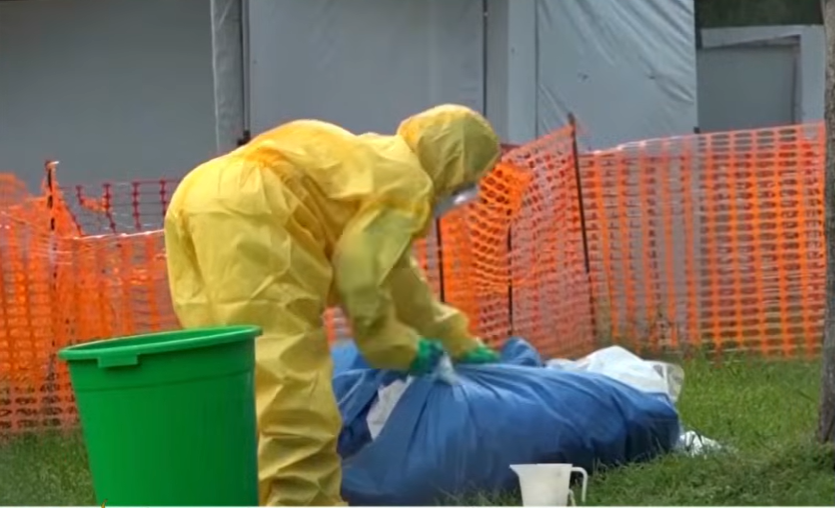
Industry Insights
Ebola Outbreaks in Africa
Clinical Challenges, Supportive Care, and the Role of Patient Monitoring
When Ebola outbreaks occur, global attention often focuses on controlling transmission, improving diagnostic capacity, and expanding vaccination strategies. However, another critical challenge exists behind every outbreak: how healthcare systems provide effective supportive care for patients who become critically ill.
The 2026 Bundibugyo virus outbreak reported in the Democratic Republic of the Congo (DRC) and Uganda has once again highlighted the complexity of Ebola response. While infection prevention remains essential, previous outbreaks have demonstrated that reducing transmission is only one part of the challenge. The ability of healthcare facilities to monitor, stabilize, and support severely ill patients is equally important.
From the large-scale West Africa Ebola outbreak between 2013 and 2016 to repeated regional outbreaks in subsequent years, Ebola has revealed a broader healthcare challenge. Managing Ebola virus disease is not only a question of controlling a pathogen—it is also a test of healthcare infrastructure, clinical resources, and patient management capabilities.
UM2017 — 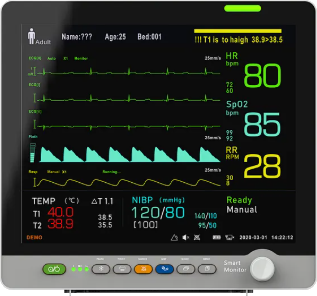 The UM2017 patient monitor features a unique 17-inch inclined HD display for optimal viewing and improved clinical efficiency. With integrated accessory storage and seamless central monitoring compatibility, it offers a high-performance, ergonomic solution for modern hospitals and clinical care. Learn more →
Understanding Ebola Virus Disease: Symptoms and Clinical Progression
Despite its reputation as a highly dangerous hemorrhagic disease, Ebola virus disease does not typically begin with dramatic bleeding symptoms. Instead, early clinical presentation is often non-specific, making early recognition challenging.
During the initial stage, patients may experience:
- fever
- fatigue
- weakness
- muscle pain
- headache
These symptoms can resemble other tropical infectious diseases, potentially delaying diagnosis and isolation.
As Ebola progresses, patients may develop more severe gastrointestinal symptoms, including vomiting and diarrhea. Significant fluid loss can lead to dehydration, electrolyte imbalance, and circulatory instability.
Although bleeding complications may occur in severe cases, current clinical understanding indicates that mortality is often associated with complex physiological disturbances, including hypovolemic shock, systemic inflammatory responses, and multi-organ dysfunction.
This progression highlights an important clinical principle: Ebola management depends not only on controlling infection but also on maintaining physiological stability through timely supportive care.
The Hidden Challenge: Managing Critically Ill Patients During Ebola Outbreaks
While public health discussions often focus on containment strategies, healthcare workers inside Ebola treatment units face another demanding task: managing rapidly changing patient conditions in highly controlled environments.
Ebola treatment settings present unique challenges. Strict infection prevention procedures, including personal protective equipment (PPE), are necessary to protect healthcare workers. However, these measures can also make continuous bedside assessment more difficult.
At the same time, many outbreak-affected regions face limitations in healthcare resources, including:
- limited intensive care capacity
- shortages of trained medical personnel
- restricted access to advanced monitoring equipment
These challenges become more significant because Ebola patients can experience rapid clinical deterioration. Changes in fluid balance, infection severity, and organ function may result in:
- decreasing blood pressure
- increased heart rate
- worsening metabolic imbalance
- respiratory complications
- signs of organ dysfunction
For clinicians, the challenge is not only identifying that a patient is deteriorating, but recognizing these changes early enough to adjust supportive treatment.
Research on critical care delivery during infectious disease outbreaks has emphasized the importance of improving clinical monitoring and moving from reactive intervention toward earlier recognition of physiological deterioration.
The Importance of Vital Signs Monitoring in Ebola Patient Management
Patient monitoring does not directly treat Ebola virus infection, nor does it prevent viral replication. Instead, it provides healthcare professionals with continuous information about a patient's physiological condition, allowing supportive treatment decisions to be made more accurately.
In Ebola care, where there is no widely available direct antiviral solution for all cases, maintaining cardiovascular stability, managing complications, and preventing irreversible organ dysfunction are central goals of treatment.
Monitoring key vital signs can help clinicians identify early warning signals:
Heart Rate Monitoring
Severe dehydration, infection-related stress, and circulatory changes may lead to increased heart rate. Tracking heart rate trends helps clinicians evaluate whether a patient may require fluid management or additional supportive intervention.
Blood Pressure Monitoring
Hypotension is one of the important indicators of circulatory instability. Regular blood pressure assessment helps healthcare providers identify patients at risk of hypovolemic shock and adjust treatment strategies accordingly.
Oxygen Saturation (SpO₂) Monitoring
Although Ebola is not primarily a respiratory disease, severe systemic infection can affect multiple organ systems. Monitoring oxygen saturation helps identify potential respiratory complications and supports timely clinical decisions.
Temperature Monitoring
Fever patterns provide important information about inflammatory response and disease progression. Continuous temperature monitoring allows clinicians to observe changes and evaluate treatment effectiveness.
Respiratory Rate Monitoring
Changes in respiratory rate may indicate increasing physiological stress. An abnormal respiratory pattern can serve as an early warning sign of metabolic imbalance or worsening systemic complications.
How Patient Monitoring Supports Healthcare Preparedness During Infectious Disease Outbreaks
In infectious disease emergencies, clinical information is one of the most valuable resources available to healthcare teams.
Modern multiparameter patient monitors integrate measurements such as ECG, SpO₂, non-invasive blood pressure (NIBP), temperature, and respiratory rate into a single system. By providing continuous visibility into patient conditions, these devices support clinicians in making faster and more informed decisions.
In Ebola treatment environments, where direct bedside contact may be limited due to infection control requirements, reliable monitoring technology can help reduce unnecessary exposure while maintaining awareness of patient status.
The role of patient monitoring is therefore not to replace clinical judgment, but to strengthen it by providing timely physiological data in complex care environments.
Lessons From Ebola: Strengthening Global Healthcare Preparedness
Ebola outbreaks are often viewed as regional health emergencies. However, each outbreak provides lessons that extend beyond geographical boundaries.
The WHO European Region's preparedness activities during recent Ebola situations demonstrate that infectious disease threats require global readiness. In an interconnected world, international travel and movement can rapidly transform local outbreaks into global concerns.
Preparing for future health emergencies requires more than vaccines and infection control measures. Healthcare systems must also strengthen their ability to provide critical care, including access to reliable diagnostic tools, medical infrastructure, and patient monitoring technologies.
Building stronger healthcare capacity allows hospitals to respond more effectively—not only to Ebola, but also to future infectious disease challenges.
Conclusion: Supporting Better Outcomes Through Clinical Visibility
The fight against Ebola depends on more than stopping transmission. It also depends on the ability of healthcare systems to recognize deterioration, provide timely supportive care, and manage critically ill patients effectively.
When direct antiviral treatment options are limited, careful monitoring of physiological changes becomes a key component of patient management.
As global healthcare systems continue preparing for future infectious disease outbreaks, reliable patient monitoring technologies will remain an important part of emergency and critical care—helping clinicians transform rapidly changing clinical situations into informed medical decisions.
Is My Blood Oxygen Level Normal?
Why Is AI Making Medical Devices More Expensive? A Patient Monitor Case Study
Related Article