
Why Is AI Making Medical Devices More Expensive? A Patient Monitor Case Study
Industry Insights

Why Is AI Making Medical Devices More Expensive?
A Patient Monitor Case Study
Artificial intelligence has rapidly become one of the primary drivers of global semiconductor demand. Record investment in AI infrastructure, expanding hyperscale data centers, and sustained demand for high-performance GPUs and High Bandwidth Memory (HBM) are reshaping the priorities of the electronics manufacturing industry.
While much of the public discussion focuses on advances in generative AI, large language models, and accelerated computing, the effects extend far beyond the technology sector. The same semiconductor ecosystem that supports AI development also supplies components used across industrial automation, automotive electronics, telecommunications, and medical devices.
As fabrication capacity, advanced packaging resources, and key electronic components are increasingly allocated to AI-related applications, manufacturers in other industries are facing a more complex procurement environment. Longer lead times, component allocation, and higher procurement costs are becoming common challenges across sectors that depend on reliable electronic supply chains.
Recent reporting from Becker's Hospital Review suggests that hospitals are already experiencing rising procurement costs across several technology-related categories. As healthcare organizations continue investing in digital infrastructure, supply-chain pressure is becoming an increasingly important consideration for equipment purchasing.
Medical device manufacturers are not isolated from these market dynamics. A patient monitor installed beside an intensive care bed may appear unrelated to an AI data center, yet both products ultimately depend on many of the same semiconductor fabrication facilities, packaging technologies, analog integrated circuits, memory devices, power management components, and microcontrollers.
In other words, a patient monitor sitting beside a hospital bed is now indirectly competing for semiconductor resources with AI infrastructure.
Understanding this relationship is increasingly important for healthcare providers, distributors, and procurement teams. To illustrate how these global supply-chain changes translate into real manufacturing costs, this article uses the patient monitor as a practical example, examining how individual electronic components are being affected by the ongoing expansion of AI infrastructure.
UM2017 — 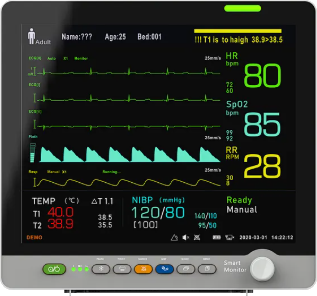 The UM2017 patient monitor features a unique 17-inch inclined HD display for optimal viewing and improved clinical efficiency. With integrated accessory storage and seamless central monitoring compatibility, it offers a high-performance, ergonomic solution for modern hospitals and clinical care. Learn more →
How One Industry Affects Another
The impact of AI on medical device manufacturing is rarely the result of GPU prices alone. Instead, it is the consequence of a shared semiconductor supply chain.
According to recent electronic component market outlooks , manufacturers continue to face fluctuations in lead times and pricing for key categories including microcontrollers, analog ICs, memory devices, and power management components. Demand from AI infrastructure is becoming one of several factors influencing component allocation across the broader electronics industry.
As demand for AI accelerators increases, semiconductor manufacturers allocate more advanced packaging and fabrication resources to high-performance products. Companies such as TSMC have expanded CoWoS packaging capacity to support AI processors and HBM integration, while lead times for various industrial and analog components have become more volatile.
For medical device manufacturers, the challenge is not that a patient monitor contains an AI GPU. The challenge is that patient monitors rely on many of the same upstream resources—foundry capacity, power management ICs, analog front-end chips, and microcontrollers—that are increasingly affected by AI-related demand.
Medical technology organizations have previously warned that semiconductor availability remains a strategic concern for the industry. Unlike consumer electronics, many medical devices rely on qualified components that cannot be replaced quickly without additional engineering validation and regulatory review.
As a result, a change in investment priorities within the AI industry can ultimately influence the availability, lead time, and procurement cost of components used in hospital monitoring equipment.
Inside a Patient Monitor: Where the Cost Really Comes From
A patient monitor is not a single integrated product, but a collection of tightly coupled electronic subsystems. Each subsystem depends on different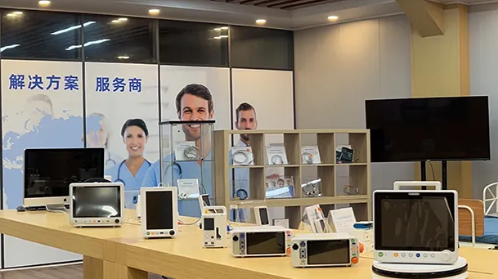 categories of semiconductor and electromechanical components, all of which are exposed to varying levels of supply chain pressure.
Understanding the cost structure requires breaking the system down into its core functional modules.
Main Control Board
The main control board functions as the central processing unit of the device, coordinating signal acquisition, display output, alarm logic, and communication.
- MCU (Microcontroller Unit)
- Flash Memory
- DDR Memory
- PMIC (Power Management IC)
Recent cost pressure is primarily driven by:
- Extended lead times for industrial MCUs
- Memory price fluctuations linked to broader semiconductor allocation cycles
- Power management IC availability affected by high-volume demand from multiple industries, including AI infrastructure and automotive electronics
ECG Module
The ECG module is highly sensitive to analog performance requirements, particularly in noise filtering and low-amplitude signal detection.
- Analog Front-End (AFE)
- ADC (Analog-to-Digital Converter)
- Signal Conditioning Circuits
AFE and precision ADC components are experiencing relatively higher supply constraints due to:
- Limited number of qualified suppliers
- Competition from industrial measurement and automotive sensing applications
- Longer qualification cycles in regulated environments
SpO₂ Module
The SpO₂ subsystem combines optical components with low-noise analog circuitry.
- Red / Infrared LEDs
- Photodiode
- Analog Signal Processing IC
Key cost drivers include:
- Tight tolerances required for medical-grade optical components
- Limited supplier base for qualified photodiodes and LED emitters
- Difficulty in substituting components without revalidation and regulatory review
NIBP Module (Non-Invasive Blood Pressure)
This module integrates both electronic and mechanical components.
- Pressure Sensor
- Air Pump
- Valve Driver IC
Cost and supply considerations are typically driven by:
- Pressure sensor availability and calibration consistency
- Mechanical component sourcing stability (pump and valves)
- System-level integration requirements that limit interchangeable sourcing
Display Module
Display systems are influenced by broader flat-panel and driver IC supply dynamics.
- LCD Panel
- Touch Panel (if applicable)
- Display Driver IC
Key factors include:
- Panel pricing fluctuations driven by display industry cycles
- Driver IC availability linked to semiconductor allocation priorities
- Integration differences across product tiers (basic vs. advanced monitors)
Communication Module
Modern patient monitors increasingly integrate connectivity functions for hospital network integration and remote monitoring applications.
- WiFi Module
- Bluetooth Module
- Ethernet PHY
This segment is influenced by:
- Growing demand for IoT-enabled medical devices
- Competition for RF and connectivity ICs across consumer and industrial markets
- Increasing software-defined functionality requiring more capable communication chipsets
Summary
Across all modules, cost variation is rarely driven by a single component. Instead, it reflects cumulative pressure across multiple semiconductor categories, each influenced by broader shifts in global demand and manufacturing allocation.
In practice, patient monitor cost structure is increasingly shaped by system-level supply chain dynamics rather than isolated component pricing.
Beyond Chips: Other Cost Drivers You Can't Ignore
Semiconductors account for a significant portion of a patient monitor's bill of materials, but they are only one part of the overall manufacturing cost. Even when chip prices stabilize, other cost drivers can continue to influence the final product price.
Printed circuit boards (PCBs), for example, 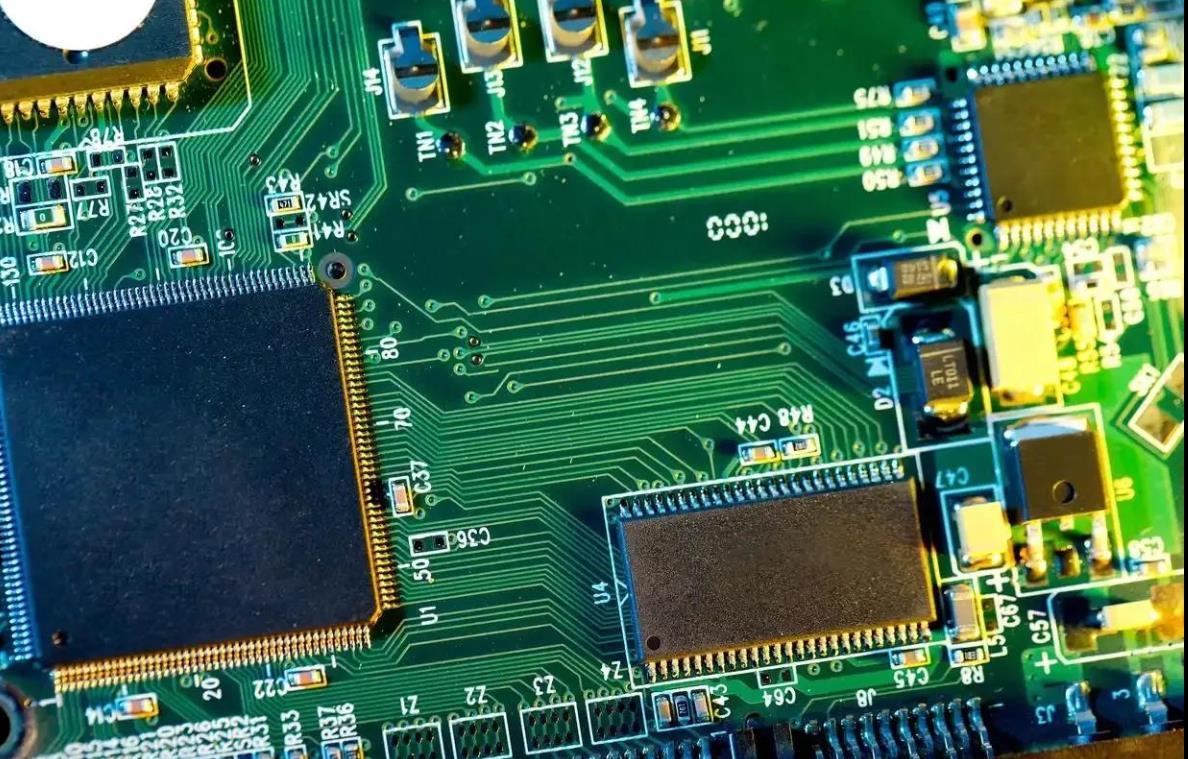 are affected by fluctuations in copper prices, laminate materials, and manufacturing capacity. Precious metals such as gold, commonly used in connectors and high-reliability electrical contacts, also contribute to cost variability.
In addition, passive components—including capacitors, resistors, inductors, and connectors—represent a large number of individual parts within every monitor. While the cost of a single component may be small, changes across hundreds of components can have a measurable impact on the overall bill of materials.
Packaging and logistics remain important considerations as well. Medical devices require specialized protective packaging, and international freight costs continue to fluctuate in response to global transportation conditions and regional supply chain disruptions.
Unlike many consumer electronic products, medical devices are also subject to rigorous regulatory requirements. Any significant component substitution may require additional engineering validation, safety testing, electromagnetic compatibility (EMC) verification, or regulatory documentation before production can resume.
For this reason, the manufacturing cost of a patient monitor reflects far more than semiconductor pricing alone. It is the result of a complex supply chain in which raw materials, electronic components, logistics, and regulatory compliance all contribute to the final cost structure.
Why Medical Devices Can't Switch Components Easily
One common misconception is that manufacturers can simply replace unavailable components with equivalent alternatives. While this approach is often feasible in consumer electronics, it is significantly more challenging for medical devices.
A smartphone manufacturer may substitute a microcontroller or memory device with minimal impact on product availability. In contrast, replacing a key component in a patient monitor—such as an analog front-end (AFE), ADC, or microcontroller—can require extensive engineering evaluation before the product can return to production.
Depending on the component and its function, manufacturers may need to perform electrical verification, software validation, electromagnetic compatibility (EMC) testing, safety assessment, and risk analysis to demonstrate that device performance remains unchanged. In some cases, additional regulatory documentation or product registration updates may also be required.
These requirements make component substitution both time-consuming and costly. As a result, medical device manufacturers have far less flexibility when responding to component shortages than many other electronics industries.
For procurement teams, this means that the impact of semiconductor supply constraints extends beyond component pricing alone. Longer qualification cycles and limited substitution options can further increase manufacturing costs and affect production schedules, making supply chain planning an essential part of medical device manufacturing.
Conclusion
Beyond manufacturing, a researcher from University of Pennsylvania have also suggested that the rapid adoption of AI could contribute to broader healthcare cost pressures through infrastructure investment, technology deployment, and reimbursement challenges. Manufacturing cost is only one part of a much larger economic picture.
The impact of AI extends well beyond GPUs and data centers. As investment in AI infrastructure continues to grow, its influence is increasingly being felt across the broader semiconductor ecosystem, affecting component availability, procurement strategies, and manufacturing costs for medical devices.
For products such as patient monitors, the challenge is not limited to rising component prices. Longer lead times, limited substitution options, and strict regulatory requirements make supply chain resilience a critical part of product delivery.
Understanding these industry dynamics enables manufacturers, distributors, and healthcare providers to make more informed procurement decisions and better prepare for future market changes.
Ebola Outbreaks in Africa: Clinical Challenges, Supportive Care, and the Role of Patient Monitoring
COPD Statistics 2026: Global Prevalence, Mortality, Risk Factors and Healthcare Costs
Related Article