
Understanding COPD and Why Oxygen Monitoring Matters More Than Ever
Health & Monitoring
Understanding COPD and Why Oxygen Monitoring Matters More Than Ever
For millions living with Chronic Obstructive Pulmonary Disease (COPD), accurate and continuous oxygen monitoring is not just helpful — it’s essential for managing symptoms, preventing complications, and maintaining quality of life.
What is COPD?
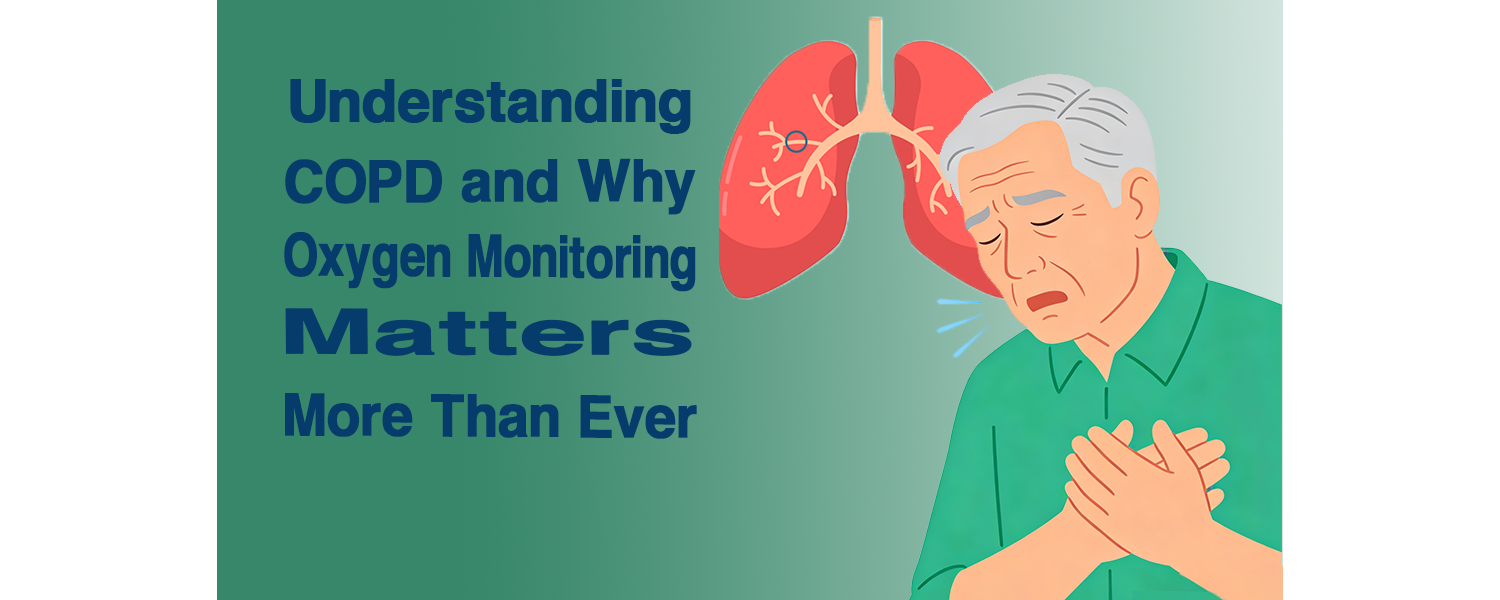
Chronic Obstructive Pulmonary Disease (COPD) is a progressive lung condition that includes chronic bronchitis and emphysema. It restricts airflow, making breathing difficult and reducing the lungs’ ability to deliver oxygen to the body.
Common symptoms include shortness of breath, persistent cough, wheezing, and fatigue. As the disease advances, low blood oxygen levels (hypoxia) become a major risk — often silent at first, but potentially leading to serious complications if not addressed early.
Because COPD is progressive, continuous monitoring and early detection of oxygen changes are critical for proactive care and preventing emergencies.
Why Oxygen Monitoring is Essential for COPD Patients
When oxygen saturation (SpO₂) drops, vital organs and tissues may not receive enough oxygen. This can cause dizziness, confusion, rapid heart rate, or even require hospitalization.
A reliable pulse oximeter provides a simple, non-invasive way to measure SpO₂ and pulse rate in seconds. For COPD patients, it helps:
- Detect early signs of oxygen deprivation
- Monitor disease progression over time
- Evaluate treatment effectiveness
- Make timely decisions about seeking medical help
Unlike occasional hospital visits, a trusted home or clinical monitoring device enables continuous awareness and proactive management.
A Smarter Solution: UPM60 Handheld Pulse Oximeter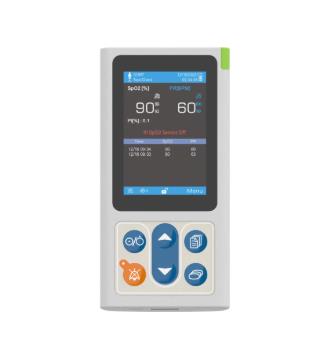
The UPM60 Handheld Pulse Oximeter is an advanced, professional-grade device designed for both clinical and home use, making it an ideal choice for COPD management.
Featuring a 3.5-inch high-resolution color touchscreen (320×480 pixels), it delivers clear, intuitive data visualization without complicated buttons. Beyond standard SpO₂ and pulse rate, it supports wearable detection for respiratory rate and waveform — providing deeper insights into respiratory health.
Practical Features for COPD Management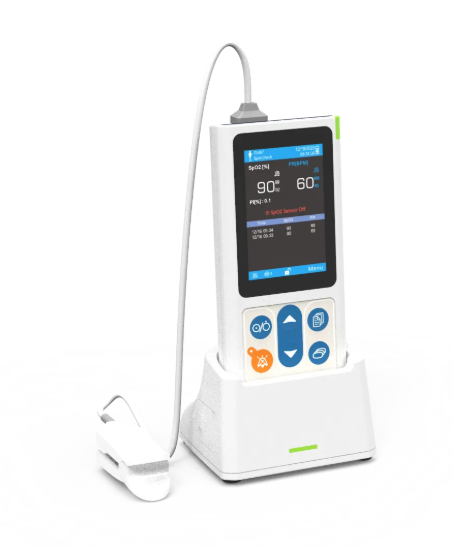
The UPM60 offers three flexible monitoring modes — spot-check, record, and continuous — allowing quick checks or extended overnight monitoring. It stores up to 999 patient files with over 120 hours of continuous data, making trend tracking and report sharing with doctors seamless.
With dual power options (AC charger or long-lasting rechargeable battery providing over 15 hours of use), silent sleep mode, and automatic power-saving features, it ensures reliable, uninterrupted monitoring — even at night. Compact and lightweight at just 265–280g, it’s highly portable for home, clinic, or hospital settings.
It supports a wide range of patients, including adults, pediatric, and neonatal, with medical-grade accuracy you can trust.
Key Features at a Glance
With the UPM60, COPD patients and caregivers gain medical-grade accuracy and peace of mind — enabling better daily management and fewer emergencies.
Take control of respiratory health with reliable, professional monitoring.
CHECK UPM60 NOW→Rethinking Central Venous Pressure ( CVP) : From Traditional Marker to Part of Comprehensive Hemodynamic Assessment
Why Everyone Should Have a Pulse Oximeter
Related Article