
Key Precautions for UTECH Patient Monitors
author: Wendy
2025-04-22
In medical work, the UTECH patient monitor is a reliable assistant for obtaining key vital sign data of patients. However, only by strictly following the usage norms and precautions can accurate data and stable operation of the equipment be ensured, providing a reliable basis for patient diagnosis and treatment. The following are some precautions for using the UTECH patient monitor.

I. Detailed Inspection and Preparation Before Use
- Appearance and accessory inspection: Carefully check the main unit of the monitor for any physical damage such as cracked casing or scratched display. Also, check if all interfaces are deformed or corroded. Ensure that accessories such as ECG electrodes, blood pressure cuffs, and pulse oximeter probes are complete and in good condition. Issues like insufficient adhesion of electrode pads or air leakage in the blood pressure cuff can affect monitoring results and need to be replaced promptly.
- Power supply and startup: Make sure the voltage of the power socket inserted matches the monitor (usually 220V AC). Avoid using inferior or unstable power sources to prevent equipment damage or abnormal data. After startup, wait patiently for the device to complete self-check. If a fault prompt appears, do not force its use. Contact a professional for repair immediately.
- Patient information entry: Basic information such as name, gender, and age must be accurate. These data are closely related to the monitoring data. Incorrect information may lead to misjudgment of the patient's condition and affect the formulation of subsequent treatment plans.
II. Key Points to Pay Attention to During Use
1.Monitoring parameter settings and adjustments
1.Monitoring parameter settings and adjustments
- ECG monitoring: Electrode connection must be strictly in accordance with standard operations. Select leads based on the patient's condition and monitoring needs, and flexibly adjust filter parameters according to actual interference conditions to balance signal clarity and detail retention.
- Blood pressure monitoring: The size of the cuff should be suitable for the patient's upper arm circumference. A cuff that is too narrow will result in higher readings, while one that is too wide will give lower readings. When wrapping the cuff, the lower edge should be 2 - 3 cm from the elbow crease, and the tightness should allow one finger to be inserted.
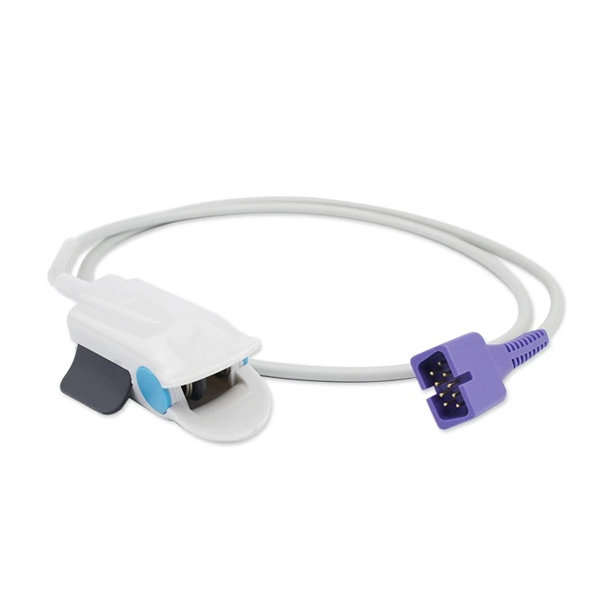
- Blood oxygen saturation monitoring: The connection of the probe is crucial. Place the blood oxygen probe on the finger, earlobe, etc., ensuring that the light-emitting and light-receiving elements are accurately aligned and the tightness is appropriate. Excessive tightness can impede blood circulation, while excessive looseness can lead to poor signal collection, both resulting in inaccurate measurement data.
- Respiratory rate monitoring: Ensure the sensor is installed correctly. Good contact of the ECG electrodes is a prerequisite; when using a respiratory sensor, fix it in the appropriate position to accurately sense respiratory movements. Otherwise, false alarms of respiratory rate may occur. The alarm range should be set considering the patient's age and condition.
- Temperature monitoring: Place the probe according to the measurement site (axilla, rectum, or mouth) as per the standard operation. The upper and lower limits of the alarm should be set in line with the patient's clinical needs to promptly detect abnormal temperature fluctuations.
2.Data observation and alarm handling
During use, continuously and closely observe the data on the monitor screen and pay attention to the trend of data changes.
When an alarm sounds, check the alarm information immediately and quickly determine the cause.
When an alarm sounds, check the alarm information immediately and quickly determine the cause.
If the alarm is triggered by changes in the patient's condition, notify the doctor immediately and cooperate in the assessment and treatment of the condition.
If it is due to equipment or sensor issues, such as electrode pad detachment or probe displacement, quickly troubleshoot and reconnect or adjust the equipment to ensure normal monitoring. Do not ignore the alarm signal or blindly eliminate the alarm prompt.
3. Patient and equipment safety
- Ensure patient safety: Avoid tripping patients with the monitor's connecting cables. When the patient turns over or moves, carefully protect the connected equipment to prevent electrode pad detachment or probe displacement. At the same time, pay attention to the patient's reaction to the monitoring equipment. If skin allergies or discomfort occur, handle them promptly, such as changing the position of the electrode pads or taking appropriate protective measures.
- Pay attention to equipment safety:Prevent the monitor from being damaged by collision, dropping, or water immersion. It is strictly prohibited for non-professional personnel to disassemble the equipment components at will. Equipment maintenance and repair must be carried out by professional technicians.
- Pay attention to electrical safety:Regularly check if the power cord is damaged.Avoid using the equipment in a humid environment to prevent safety accidents such as electric leakage.

III.Proper maintenance and management after use
After use, clean and disinfect the monitor and accessories in a timely manner.
After use, clean and disinfect the monitor and accessories in a timely manner.
- Electrode pads are disposable items and should be discarded after use; accessories such as blood pressure cuffs and blood oxygen probes should be disinfected in accordance with hospital infection control regulations to prevent cross-infection.
- The surface of the monitor can be wiped with a clean damp cloth to keep it clean.
- Regularly perform performance tests and calibrations on the monitor to ensure the accuracy and stability of the measurements.
- For equipment that is not used for a long time, it should be properly stored in a dry and well-ventilated environment and powered on for regular checks to prevent malfunctions due to long-term idleness.
If you want to know more information, please click the link below: //www.chinautech.com/
The Cost of Sleepless Nights: How Late Nights Secretly Harm Your Heart and Health
Improving Enterprise Quality Management: Practical Approaches to Standardization, Quality Assurance, and Detail-Oriented Practices
Related Article

Discover how summer heat affects the body and learn the difference between being overheated and having a fever. This guide provides practical tips on how to correctly measure body temperature in hot weather and highlights the features of UTECH Medical’s UTM10 infrared thermometer, including its one-second, non-contact measurement, 30-reading memory, and reliable accuracy for home and public safety.
Too Hot? Check Your Temperature the Right Way This Summer

Learn key facts about Marburg virus disease (MVD), a rare but severe hemorrhagic fever caused by a Filoviridae RNA virus. Discover how the virus spreads from Egyptian rousette bats to humans, its initial symptoms—including high fever, bleeding, and organ failure—and current laboratory diagnosis methods like RT-PCR. Explore supportive care treatments, prevention strategies
Marburg virus disease
Can asthma go away? Learn about asthma remission, genetic factors, symptoms, asthma cough, and the warning signs of life-threatening status asthmaticus.
Can Asthma Go Away Completely?

Explore tHIS ASEAN 2026, Southeast Asia’s leading healthcare exhibition connecting global medical technology providers with regional distributors, hospitals, and healthcare professionals. Discover ASEAN healthcare market growth, medical device opportunities, patient monitoring systems, pulse oximeters, AI healthcare, remote patient monitoring, and emerging trends shaping the future of healthcare across Southeast Asia.
tHIS ASEAN 2026: Southeast Asia Healthcare Exhibition and Medical Device Opportunities