Exchange of Oxygen and Carbon Dioxide
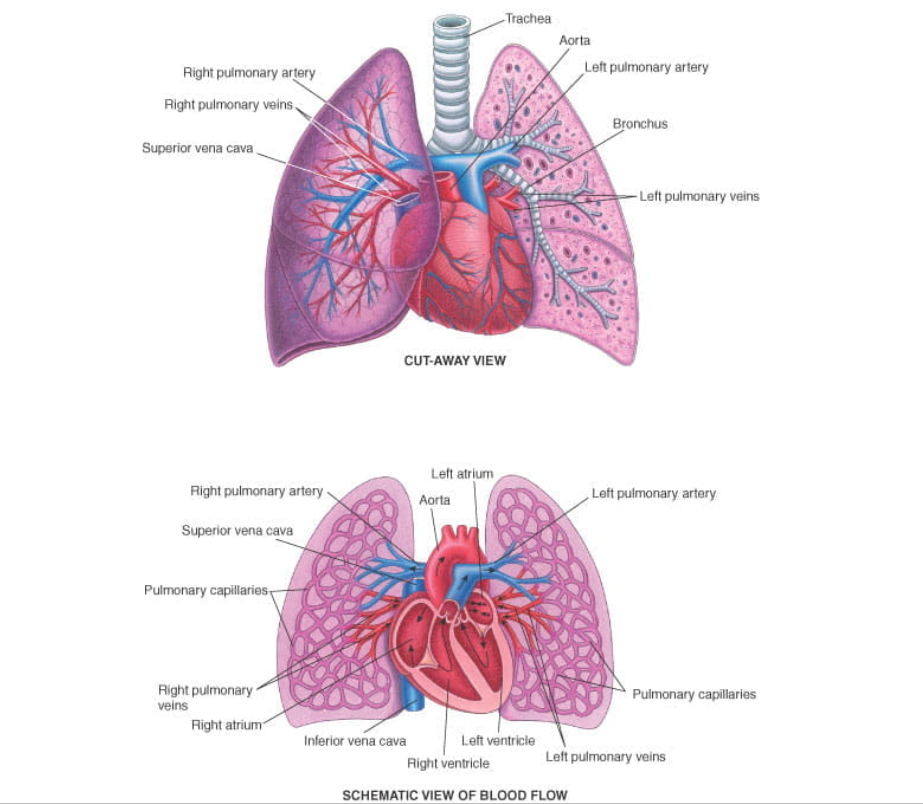
The main function of the respiratory system is to inhale oxygen and expel carbon dioxide. Inhaled oxygen enters the lung tissue and reaches the alveoli. The cells that make up the alveoli and capillaries are a single layer of cells that are tightly integrated with each other. The average thickness of the barrier between air and blood is about 1 micron (1/10,000 of a centimeter or 0.000039 inches). Oxygen can quickly pass through this blood-gas barrier and enter the blood. Likewise, carbon dioxide passes through this barrier from the blood into the alveoli and is then exhaled out of the body.
Oxygenated blood travels from the lungs through the pulmonary veins into the left side of the heart, where the left ventricle pumps blood to the rest of the body. Oxygen-poor but carbon dioxide-rich blood returns to the right heart through two large veins, the superior and inferior vena cava. The blood is then pumped through the pulmonary arteries to the lungs, where oxygen is absorbed and carbon dioxide is released.
In order to support the inhalation of oxygen and the release of carbon dioxide, even when a person is at rest, the lungs inhale and expel an average of about 5 to 8 liters of air per minute, and about three-tenths of a liter of oxygen is transported from the alveoli to the blood every minute. At the same time, approximately the same volume of carbon dioxide passes from the blood into the alveoli and is then expelled from the body. During exercise, up to 100 liters (about 26 gallons) of air can be inhaled and exhaled per minute, and 3 liters (just under 1 gallon) of oxygen can be extracted into the blood every minute. The rate at which oxygen is consumed by the body is one of the effective indicators to measure the total energy consumption of the body. Inhalation and exhalation are performed by respiratory muscles.
There are three basic steps for oxygen to enter the blood flowing through the lungs from the outside: ventilation, diffusion and perfusion.
a. Pulmonary ventilation is the process by which air is breathed in or out of the lung tissue.
b. Diffusion is the spontaneous movement of gases between the alveoli and capillaries in the lungs without the use of any energy or body effort.
c. Perfusion refers to the action of the cardiovascular system in pumping blood into the lungs.
The systemic circulation provides the necessary connection between oxygen-containing air and tissue cells that consume oxygen. For example, oxygen transport to muscle cells throughout the body not only relies on the function of lung tissue, but also requires the oxygen-carrying capacity of the blood and the transport capacity of the circulation. Additionally, a small portion of the blood pumped from the heart enters the bronchial arteries and nourishes the airways.
Author: Rebecca Dezube, MD, MHS, Johns Hopkins University
If you want to learn more iformation, please visit: Patient monitor manufacturer | UTECH Medical (chinautech.com)
The Introduction of NIBP Measurement
What are the Differences between the Infusion Pump and the Syringe Pump?
Related Article