
Rethinking Central Venous Pressure ( CVP) : From Traditional Marker to Part of Comprehensive Hemodynamic Assessment
Hemodynamic Monitoring
Rethinking Central Venous Pressure (CVP): From Traditional Marker to Part of Comprehensive Hemodynamic Assessment
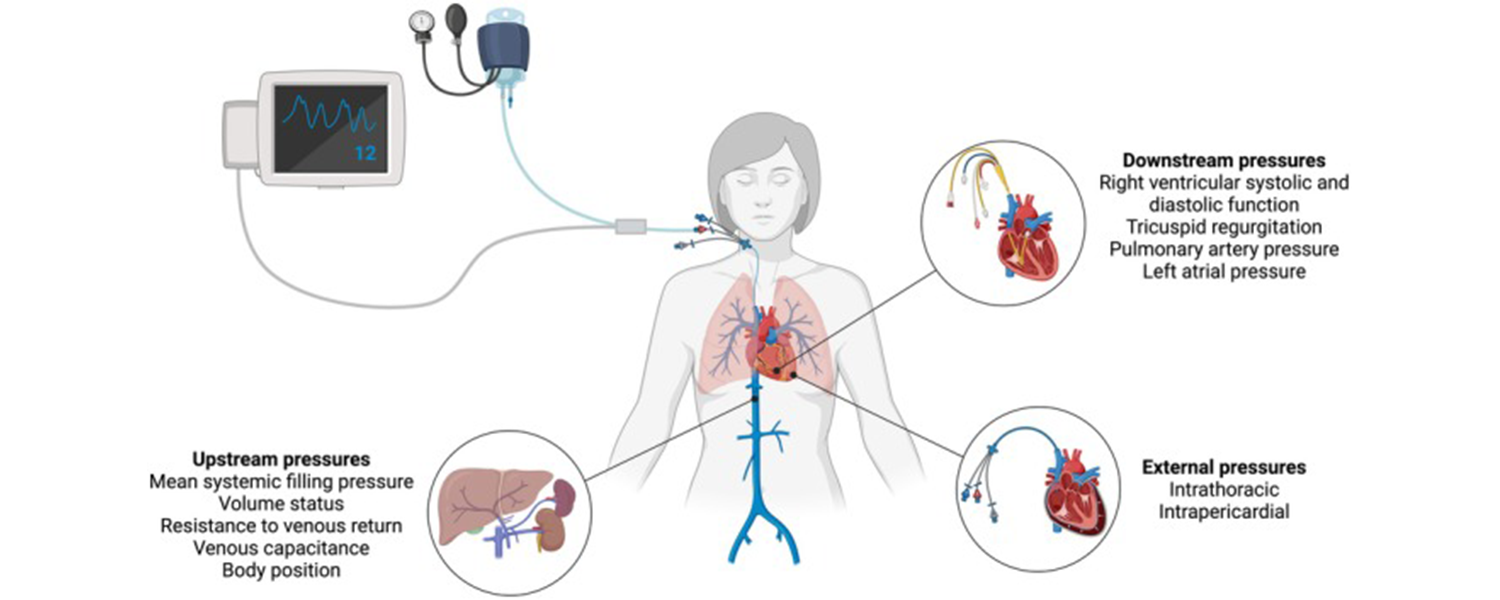
For decades, central venous pressure (CVP) has been a cornerstone of hemodynamic monitoring. Traditionally viewed as a reliable estimate of right atrial pressure and cardiac preload, CVP was routinely used to guide fluid resuscitation. However, as our understanding of circulatory physiology matures, the medical community is moving away from static targets toward a more nuanced, integrated approach that balances central and peripheral data.
The Physiological Legacy: From Starling to Guyton
Early understanding of CVP was rooted in the classic experiments of Starling and later refined by Arthur Guyton’s circulatory model. Guyton demonstrated that CVP is not just a "filling pressure" but a critical determinant of the pressure gradient driving venous return.The relationship is governed by the equation:
VR = (MSFP - RAP) / RVR
(Where VR is venous return, MSFP is mean systemic filling pressure, and RAP is right atrial pressure).
When CVP rises to equal the $MSFP$, venous return ceases. This highlights the dual nature of CVP: while it can reflect right heart function, an elevated value fundamentally acts as a "back pressure" that can impede circulation and compromise organ perfusion.
The Evidence Gap: A Standalone Parameter Under Fire
Modern evidence has significantly reshaped our understanding of CVP’s clinical utility. Multiple meta-analyses have shown only a weak correlation (r ≈ 0.16–0.18) between CVP values and fluid responsiveness. Simply put, CVP alone is a poor predictor of whether a patient will increase their cardiac output following a fluid bolus.
Furthermore, human error remains a significant hurdle. Surveys reveal that approximately 75% of clinicians make measurement errors when assessing CVP—undermining its reliability as a standalone parameter. Consequently, international guidelines, including the Surviving Sepsis Campaign, no longer recommend targeting specific CVP values (e.g., 8–12 mmHg) for fluid resuscitation.
From Static Numbers to Dynamic Waveforms
The true value of CVP now lies in waveform analysis. The characteristic a, c, and v waves offer a window into myocardial compliance. For instance, an elevated CVP may signal venous congestion or reduced perfusion gradients (where Organ Perfusion Pressure ≈ MAP - CVP), which have been linked to acute kidney injury (AKI).
In this landscape, clinicians must look beyond the central line to the peripheral microcirculation. This is where high-fidelity bedside monitoring becomes essential.
The Multimodal Future: Integrating Center and Periphery
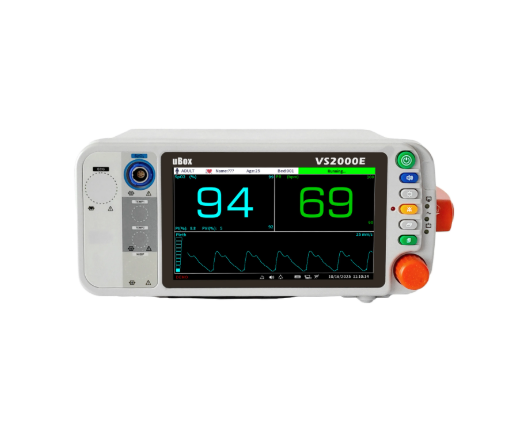
Today’s best practice favors a multimodal approach: combining CVP trends with dynamic parameters. Because CVP is most useful as a trend rather than a static point, the VS2000E Tabletop Pulse Oximeter is designed for such high-acuity environments.
|
The VS2000E provides accurate SpO₂ measurement even in low perfusion status—a state often encountered when CVP is elevated and systemic flow is compromised. |
| SpO₂ Accuracy | ±2% even in low perfusion |
| Trend Data Storage | Up to 120 hours |
| Battery Life | Up to 4 hours continuous use |
| Display | 7-inch high-resolution TFT LCD |
| Connectivity | Central Monitoring System compatible via WiFi |
Data integration is further enhanced by its Central Monitoring System compatibility via WiFi, ensuring that whether the patient is at the bedside or in transport (supported by a 4-hour battery life and lightweight design), the clinical team has real-time access to high-definition plethysmographic waveforms. By utilizing Nellcor probe compatibility, the VS2000E ensures that the peripheral feedback is as reliable as the central pressures it complements.
Conclusion: Optimizing Patient Outcomes
The future of hemodynamic management lies in thoughtful integration. Understanding the strengths and limitations of CVP—while incorporating reliable, high-precision technologies like the VS2000E—allows for more precise, safer, and individualized care. By monitoring both the "central" pressure and the "peripheral" perfusion, clinicians can ensure that their interventions translate into true tissue oxygenation.
Looking for advanced monitoring solutions that complement your hemodynamic assessment?
Discover the VS2000E →Does Skin Tone Affect Pulse Oximeter Accuracy? -The Science Behind the Signal
Understanding COPD and Why Oxygen Monitoring Matters More Than Ever
Related Article