
Does Skin Tone Affect Pulse Oximeter Accuracy? -The Science Behind the Signal

Health Equity & Monitoring
Does Skin Tone Affect Pulse Oximeter Accuracy?
-The Science Behind the Signal
For decades, the pulse oximeter has been celebrated as a "fifth vital sign"—a non-invasive marvel that tracks blood oxygen saturation (SpO₂) with a simple clip on the finger. However, recent landmark studies from Harvard Medical School (HMS) and the British Medical Journal (BMJ) have brought a long-standing medical bias into the spotlight: the pulse oximeter’s "vision" is not colorblind. As we move toward a more equitable era of healthcare, understanding the intersection of physics, physiology, and skin pigment is essential for both clinicians and home users.
1. The Physics of the "Light Catcher": How Melanin Competes
To understand the bias, we must first look at how these devices "see." Pulse oximetry relies on Transmittance Photoplethysmography. The device emits two specific wavelengths of light: Red (660nm) and Infrared (940nm).
- Oxygenated hemoglobin absorbs more infrared light.
- Deoxygenated hemoglobin absorbs more red light.
The "Light Catcher’s Dilemma" arises because melanin—the pigment responsible for skin color—is also a highly effective light absorber, particularly in the 660nm red light spectrum. In individuals with darker skin tones, the melanin acts as a filter, "stealing" or scattering the red light before it can reach the vascular bed.
If the device’s algorithm isn't sophisticated enough to subtract this "background noise" caused by skin pigment, it may miscalculate the ratio, often leading to an overestimation of oxygen levels.
2. Occult Hypoxemia: The Dangerous "Gap of a Few Degrees"
The most concerning discovery highlighted by Harvard Medical School is a phenomenon known as Occult Hypoxemia (hidden low oxygen).
In many clinical trials, pulse oximeters showed high accuracy when a patient’s oxygen levels were in the healthy range (95%–100%). However, as oxygen levels drop—the very moment when accuracy matters most—the discrepancy widens.
A patient with high melanin levels might have a pulse oximeter reading of 92% (appearing stable), while their actual arterial blood oxygen (measured via a blood gas test) is a critical 88%. This "small" 4% gap is the difference between being sent home and being admitted to the ICU. The BMJ emphasizes that this isn't just a technical glitch; it’s a systemic risk that can lead to delayed treatment for Black, Hispanic, and Asian patients.
3. The Calibration Legacy: A Historical Blind Spot
Why does this discrepancy exist in 2026? Part of the answer lies in the history of medical device testing.
Historically, many pulse oximeter algorithms were calibrated using data from volunteers with lighter skin tones. When a device is "taught" what healthy blood looks like primarily through a lens of low melanin, its performance on diverse populations becomes an afterthought rather than a core metric. The medical community is now calling for a "re-calibration" of the industry, demanding that devices be tested across the full Fitzpatrick Scale (a classification schema for human skin color) to ensure safety for everyone, regardless of their background.
4. Beyond Pigment: The "Perfect Storm" of Inaccuracy
While skin tone is a primary factor, it often interacts with other physiological variables to create a "perfect storm" for inaccurate readings:
- Poor Perfusion: If a user has cold hands or low blood pressure, the "pulse" signal becomes weak, making it harder for the sensor to distinguish between blood and skin pigment.
- The Fingernail Factor: As noted by Anesthesia Services, chemical interference from nail polish—specifically dark blues, greens, and blacks—can block light transmission even more aggressively than melanin.
- Ambient Light Interference: Strong overhead surgical lights or direct sunlight can "wash out" the sensor, leading to erratic data.
5. Clinical Protocol: How to Monitor Safely at Home
Given these limitations, how should a proactive user or caregiver interpret SpO₂ data?
- Prioritize the Trend over the Total: A single snapshot of 94% is less informative than seeing a steady decline from 98% to 94% over several hours.
- Verify the Pulse Wave (Pleth): Most professional-grade oximeters show a waveform or a signal strength bar. If the wave is jagged or low, the SpO₂ reading is likely unreliable.
- The "Physical Check" Rule: Always cross-reference the machine with the person. If the device says "97%" but the user is struggling to speak, has blue-ish lips (cyanosis), or is confused, ignore the machine and seek emergency care.
- Warm the Hands: Before measuring, rub your hands together to increase blood flow to the capillaries.
6. Advancing the Standard of Home Monitoring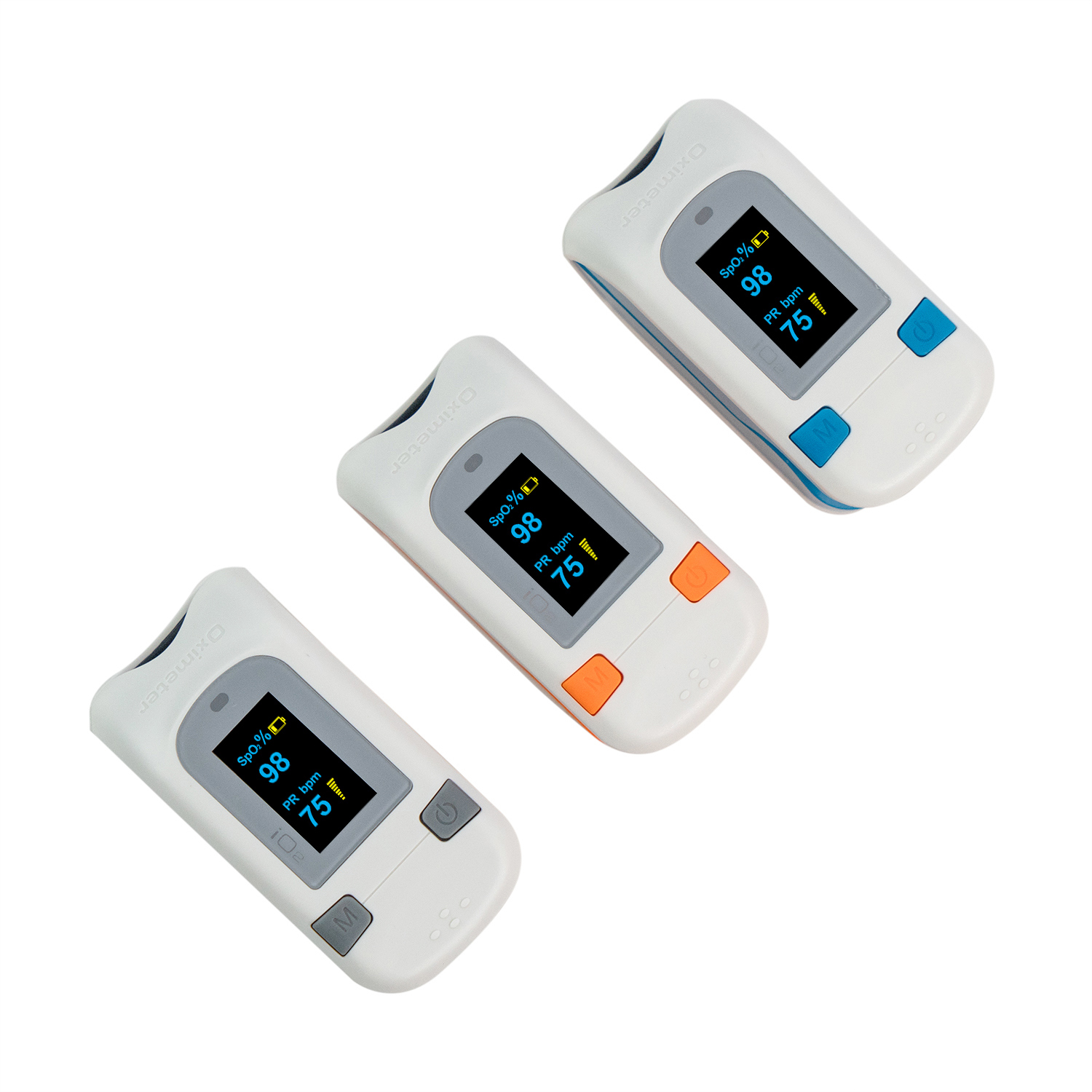
While the industry works toward universal calibration, choosing a device with high-sensitivity sensors and robust signal processing can help mitigate common errors. Our Fingertip Pulse Oximeter - IO2 is designed for high-frequency health management, offering features that cater to a wide range of users:
| Display | High-Resolution OLED (0.96-inch) with Plethysmogram |
| Rapid Assessment | Stabilized readings within 5-10 seconds |
| Extended Data Logging | Saves up to 120 hours of date-stamped events |
| Low Perfusion Optimization | Accuracy (±2%) with 15-hour battery life & auto power-off |
Note: This device is a tool for daily health management and wellness monitoring. It is not intended to replace professional medical diagnosis or the "Gold Standard" arterial blood gas test.
Does Nail Polish Affect Pulse Oximeter Accuracy? — The Science Behind the Signal —
Rethinking Central Venous Pressure ( CVP) : From Traditional Marker to Part of Comprehensive Hemodynamic Assessment
Related Article