
Breaking 2: What the 2026 London Marathon Record Tells Us About SpO2 and Your Training

Endurance & Physiology
Breaking 2: What the 2026 London Marathon Record Tells Us About SpO2 and Your Training
The Role of Oxygen Economy in Elite and Everyday Marathons
 On April 26, 2026, Kenyan runner Sebastian Sawe stunned the world at the London Marathon, finishing in 1:59:30 to become the first athlete to break the two-hour barrier in a sanctioned race officially, smashing the previous world record by a remarkable 65 seconds.
This wasn’t just another world record. It was a historic leap in human endurance, proving that the once “impossible” 2-hour marathon is now a reality.
A full marathon covers 42.195 kilometers (26.2 miles). Sustaining an average pace fast enough to finish under two hours over that distance demands extraordinary efficiency in every physiological system — especially oxygen delivery and utilization.
Blood oxygen saturation (SpO₂) plays a starring role in high-intensity, long-duration endurance efforts. It directly influences aerobic capacity, how quickly fatigue sets in, and how well the body recovers afterward.
Many aspiring runners dream of tackling a full marathon one day. For beginners, a smart first step is often starting with training plans that begin with shorter distances. A half-marathon, which is 21.1 kilometers (13.1 miles), offers an excellent stepping stone to build confidence, endurance, and proper pacing.
Breaking records at the elite level requires raw talent, unbreakable belief, years of disciplined training, and a professional team constantly monitoring physiological markers. While most of us can’t replicate an elite athlete’s genetics or support system, we can use accessible tools to better understand our own bodies. One of the simplest and most effective tools is a pulse oximeter.
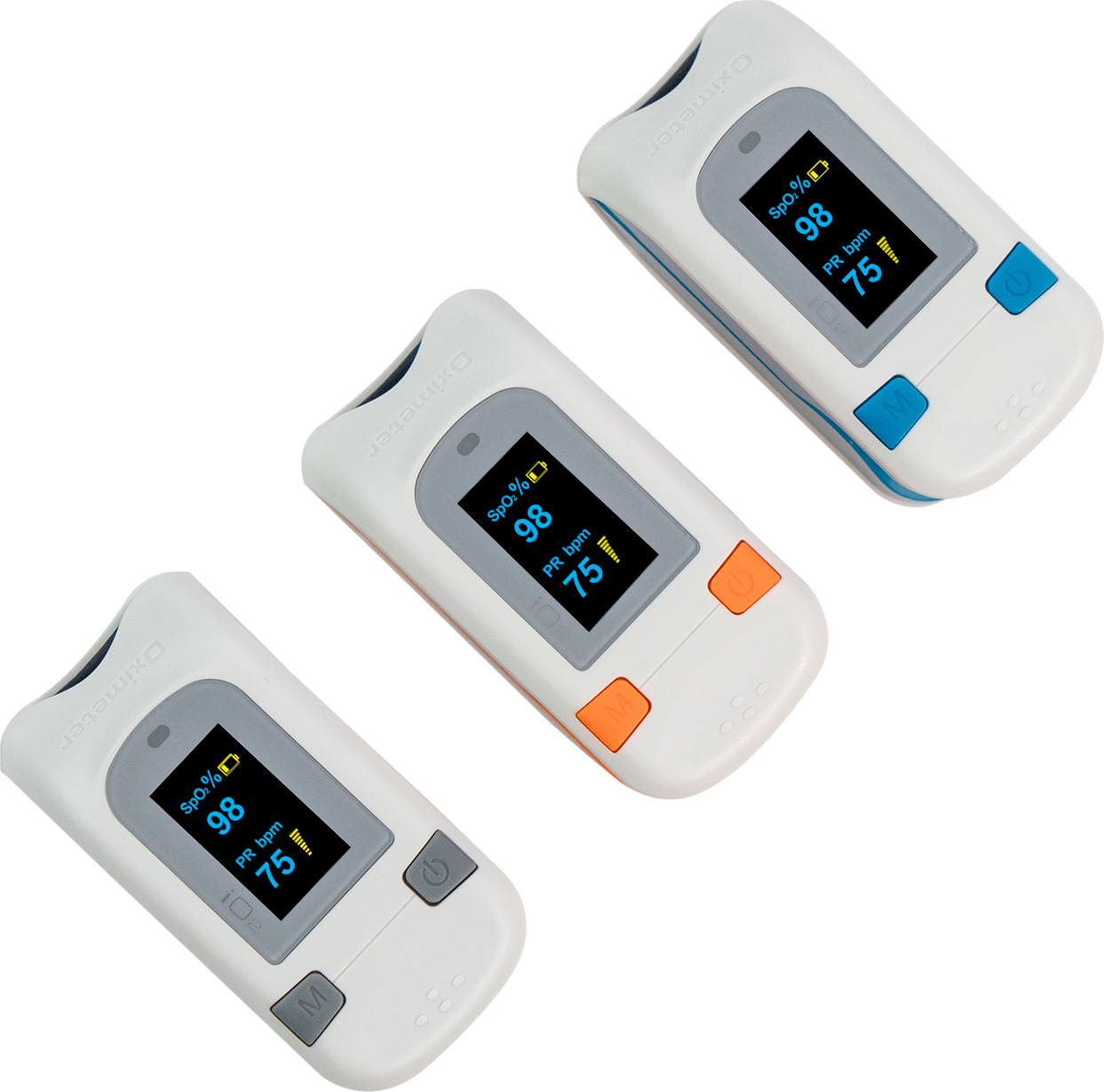 IO2 — The compact iO2 Oximeter provides accurate SpO₂ and pulse readings in seconds. Featuring an OLED display and 120-hour memory, it’s a portable, essential tool for professional and home health monitoring. Learn more →
What Actually Powers a Near-2-Hour Marathon?
It’s tempting to credit muscle strength or mental toughness alone. But long-distance performance ultimately comes down to how efficiently the body delivers and uses oxygen. Every stride requires oxygen to be transported via the bloodstream and utilized by working muscles. When this oxygen delivery system becomes inefficient, pace drops, fatigue accelerates, and performance suffers.
While elite runners train aggressively to push the limits of this system, the rest of us can gain valuable insights by monitoring SpO₂ — a key indicator of oxygen saturation in arterial blood. According to the WHO, a normal resting SpO₂ level for healthy adults is typically 95–100%.
The Science: Exercise-Induced Hypoxemia (EIH)
High-level endurance athletes often face a phenomenon known as Exercise-Induced Hypoxemia (EIH). During intense exertion, SpO₂ levels can drop significantly, leading to oxygen debt and premature fatigue. Research published in PMC8107360 highlights how maintaining stable oxygen levels is crucial for delaying lactic acid buildup and reducing "cardiovascular drift."
But SpO₂ isn't just for runners. As noted by Mount Elizabeth Health, SpO₂ is a vital sign for overall health, helping detect underlying issues or recovery status after illness. In fact, recent studies from Cambridge have even linked lower oxygen saturation to chronic fatigue symptoms, making it a critical metric for long-term wellness.
How Pulse Oximeters Add Real Value
What is pulse oximeter? Pulse oximeter is a quick, painless way to measure your heart rate and the level of oxygen (oxygen saturation) in your blood. A small device that clips onto your fingertip, a pulse oximeter uses light to figure out your oxygen level.

Here’s where a good pulse oximeter becomes a practical training partner for runners of all levels:
- 1. Recovery Monitoring & Overtraining Prevention Measure SpO₂ first thing in the morning. Consistent readings in the 95–100% range are ideal. If levels repeatedly fall below 94–95%, it may signal incomplete recovery or early stages of overtraining. Pairing SpO₂ data with Heart Rate Variability (HRV) gives an even clearer picture.
- 2. Altitude & Interval Training Optimization At altitude, SpO₂ naturally drops. Many athletes aim for a target range of roughly 88–92% during sessions to gauge adaptation. A fingertip pulse oximeter helps you fine-tune exposure and intensity.
- 3. During & After Exercise Monitoring Post-run SpO₂ recovery speed serves as a useful indicator of how quickly your body is returning to baseline. Faster recovery generally points to better aerobic fitness and adaptation.
- 4. Everyday Runners vs. Elites For most recreational runners, the bigger benefit lies in daily recovery tracking and preventing overtraining rather than chasing marginal performance gains during races.
Practical Tips for Using a Pulse Oximeter
- Recommended Type: A compact fingertip pulse oximeter is portable, affordable, and accurate enough for training insights.
- Best Times to Measure: Upon waking (fasted), before bed, immediately after hard training sessions, or via overnight tracking.
- Combine Indicators: Always cross-reference SpO₂ with heart rate, HRV, and your Rate of Perceived Exertion (RPE).
- Simple Interpretation: If your morning SpO₂ stays below 94% for three consecutive days, it’s wise to reduce training intensity or take extra rest.
Take Control of Your “Oxygen Economy”
Sebastian Sawe’s historic sub-2-hour performance in London once again proves that oxygen utilization efficiency is one of the ultimate ceilings in endurance sports. You may not have elite genetics or a professional support crew, but you can still manage your own oxygen economy more intelligently.
The iO2 Fingertip Pulse Oximeter offers a simple, reliable way to track SpO₂ and pulse rate, helping you train smarter, recover better, and reduce the risk of injury or burnout. Whether you’re training for your first half-marathon, working toward a full marathon, or simply want to run stronger and longer, adding SpO₂ monitoring to your routine is a small habit that can deliver meaningful gains.
Train smart. Recover better. Run farther.
Watching the World Cup at Estadio Azteca? Why Your SpO2 Isn't Accurate?
Normal Blood Oxygen Saturation Levels in Elderly vs Young Adults: What’s the Difference?
Related Article