
Practical application of oximeter and PI value
author: Fiona
2023-10-24
With the globalization of the epidemic, people are paying more and more attention to sports and life and health. As a product that monitors pulse, heart rate and blood oxygen saturation, oximeter is becoming more and more popular in developed countries in Europe, America and East Asia.
The oxygen saturation of normal human arterial blood is 98%, and that of venous blood is 75%.
It is an important indicator that reflects the oxygen status in the body. It is generally believed that the normal value of blood oxygen saturation should not be less than 94%, and anything below 94% is considered insufficient oxygen supply. Usually, PI is used as a parameter index, which can reflect the limb perfusion status of the person being tested and indicate the detection accuracy of the machine. That is, it can still detect under conditions of low perfusion and weak perfusion.
A normal person's pulse and heartbeat are consistent. Heart rate is the frequency at which the heart beats. The average person's rate is between 60-90 times per minute. However, when people exercise and are nervous, their heartbeat will speed up.
The oximeter's real-time blood oxygen monitoring of athletes can help understand the athlete's blood circulation after heavy exercise to guide the formulation of the athlete's exercise amount. Passengers entering Tibet by train on the Qinghai-Tibet Railway and reporters are required to wear an oximeter to detect blood oxygen. Through the monitoring of blood oxygen, the problem of blood carrying oxygen and supplying oxygen can be discovered in advance to avoid cyanosis caused by altitude sickness, which is harmful to the body. cause harm. People who work out for a long time, run for a long time, or work overtime for more than 12 hours continuously need to measure their blood oxygen and heart rate frequently to avoid danger.
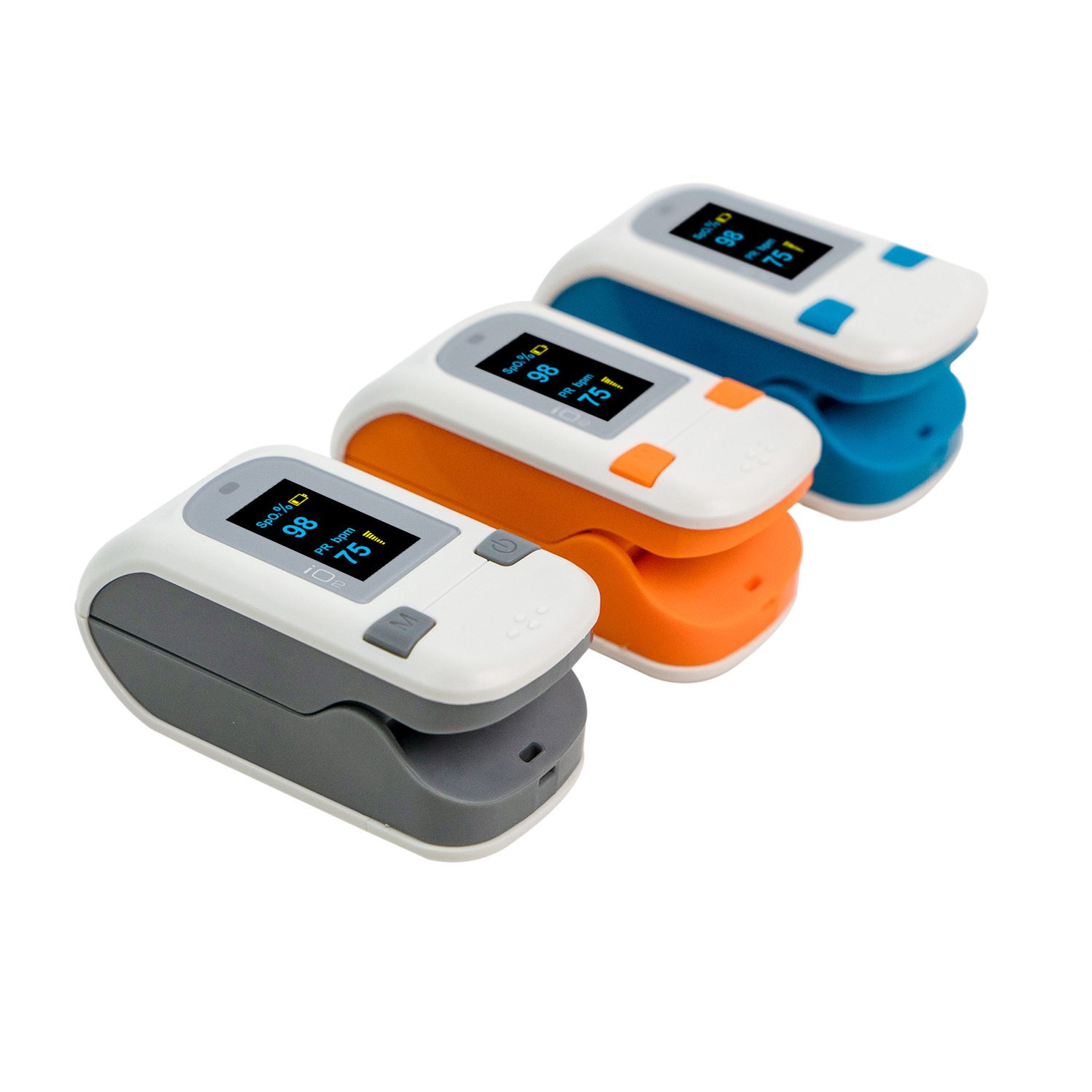
The finger-clip oximeter in the picture above uses a non-invasive method to monitor blood oxygen saturation of patients. It is mainly used in hospital clinical departments, wards, outpatient clinics, family and community medical care, as well as for monitoring blood oxygen saturation in outdoor sports such as mountaineering, cycling and long-distance running.
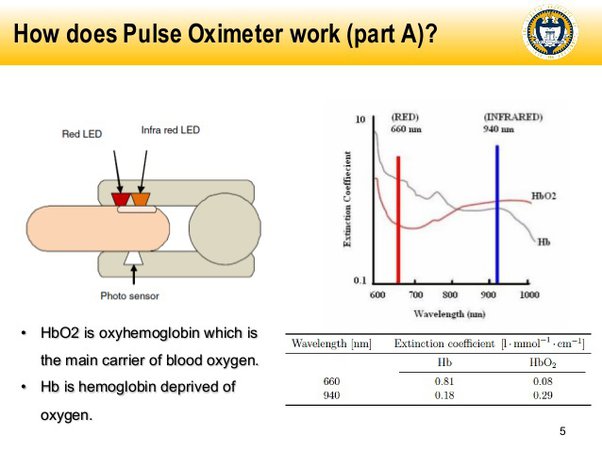
The working principle of the oximeter finger clip is to sequentially drive a red LED (660nm) and an infrared LED (910nm) LED light to aim at the translucent part of the human body (usually the fingernail). According to the measurement, the two have different characteristics. The data is derived by calculating the percentage of absorbance of the wavelength of light that passes through the body. The impact on data accuracy depends on the PI value.
Under normal circumstances, PI value: adults >1, children >0.7, patients or weak perfusion values <0.3
The oxygen saturation of normal human arterial blood is 98%, and that of venous blood is 75%.
It is an important indicator that reflects the oxygen status in the body. It is generally believed that the normal value of blood oxygen saturation should not be less than 94%, and anything below 94% is considered insufficient oxygen supply. Usually, PI is used as a parameter index, which can reflect the limb perfusion status of the person being tested and indicate the detection accuracy of the machine. That is, it can still detect under conditions of low perfusion and weak perfusion.
A normal person's pulse and heartbeat are consistent. Heart rate is the frequency at which the heart beats. The average person's rate is between 60-90 times per minute. However, when people exercise and are nervous, their heartbeat will speed up.
The oximeter's real-time blood oxygen monitoring of athletes can help understand the athlete's blood circulation after heavy exercise to guide the formulation of the athlete's exercise amount. Passengers entering Tibet by train on the Qinghai-Tibet Railway and reporters are required to wear an oximeter to detect blood oxygen. Through the monitoring of blood oxygen, the problem of blood carrying oxygen and supplying oxygen can be discovered in advance to avoid cyanosis caused by altitude sickness, which is harmful to the body. cause harm. People who work out for a long time, run for a long time, or work overtime for more than 12 hours continuously need to measure their blood oxygen and heart rate frequently to avoid danger.
[Pet Diagnosis and Treatment] Why can't we ignore the monitoring of ETCO2 during anesthesia?
Personalized hemodynamic modeling of the human cardiovascular system: areduced-order computing model
Related Article

UTECH Medical conducts customs declaration and Certificate of Origin (COO) training to strengthen employees' export knowledge and provide global customers with more efficient medical equipment transaction support.
UTMI Training Strengthens Customs Expertise and Customer Service