
How the oximeter works
author: Sky Wang
2022-05-09
How the oximeter works?
The oximeter does not need to take blood to measure blood oxygen, you can know your blood oxygen level and pulse by gently clipping your finger, and you can check your health status anytime and anywhere at home. What is the principle of oximeter? Let's understand how the oximeter works.
The role of hemoglobin is to carry oxygen to all parts of the body. We call the oxygen content of hemoglobin at any time as blood oxygen saturation.
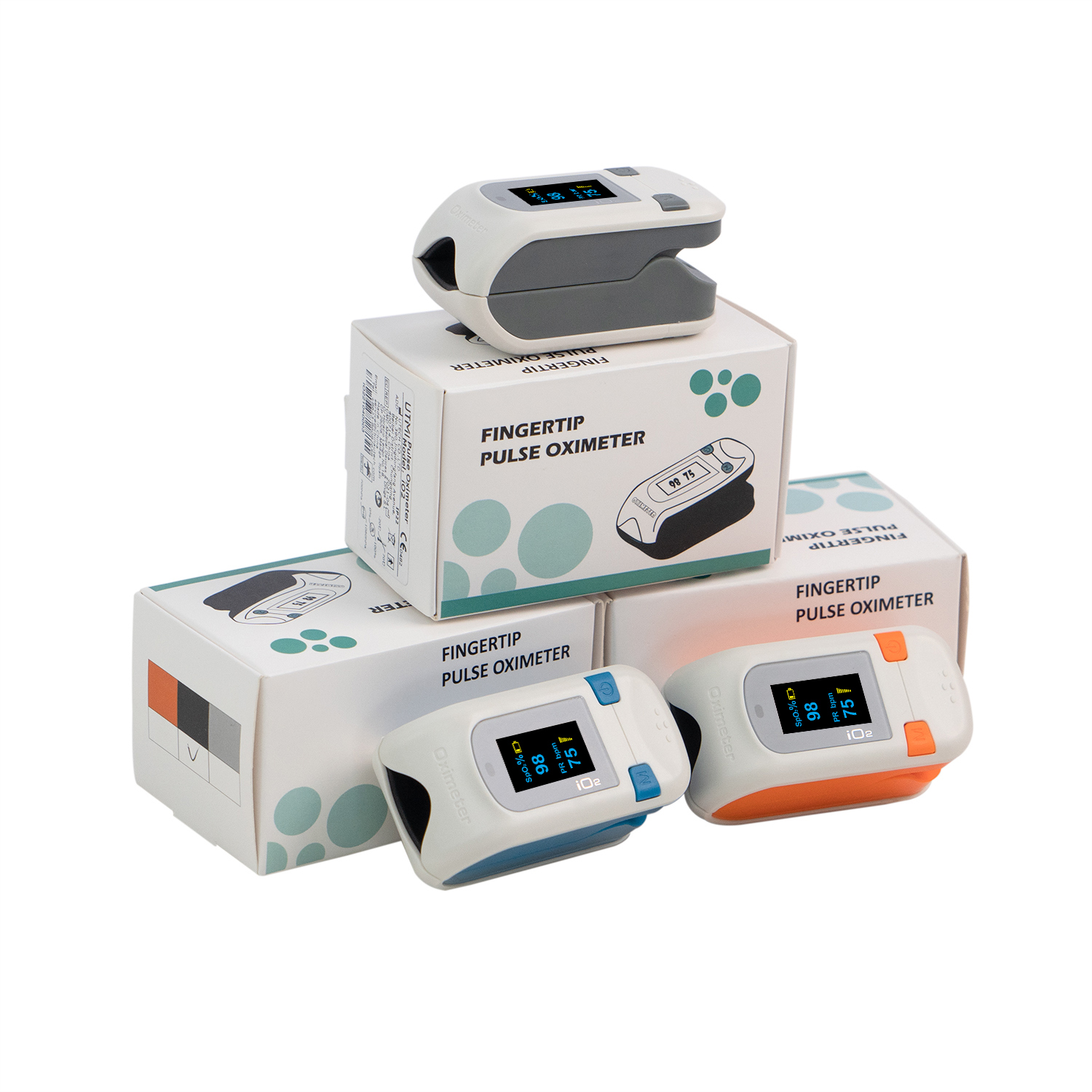
The finger oximeter measures this blood oxygen saturation. Hemoglobin has a state of carrying oxygen, and of course also has an empty state. We call the hemoglobin carrying oxygen as oxyhemoglobin, and the hemoglobin in the empty state is called reduced hemoglobin.
Oxyhemoglobin and reduced hemoglobin have different absorption properties in the visible and near-infrared spectral ranges. Reduced hemoglobin absorbs more red frequency light and less infrared frequency light; while oxyhemoglobin absorbs less red frequency light and more infrared frequency light. This distinction is the most basic basis for finger oximeters.
The oximeter does not need to take blood to measure blood oxygen, you can know your blood oxygen level and pulse by gently clipping your finger, and you can check your health status anytime and anywhere at home. What is the principle of oximeter? Let's understand how the oximeter works.
The role of hemoglobin is to carry oxygen to all parts of the body. We call the oxygen content of hemoglobin at any time as blood oxygen saturation.
The finger oximeter measures this blood oxygen saturation. Hemoglobin has a state of carrying oxygen, and of course also has an empty state. We call the hemoglobin carrying oxygen as oxyhemoglobin, and the hemoglobin in the empty state is called reduced hemoglobin.
Oxyhemoglobin and reduced hemoglobin have different absorption properties in the visible and near-infrared spectral ranges. Reduced hemoglobin absorbs more red frequency light and less infrared frequency light; while oxyhemoglobin absorbs less red frequency light and more infrared frequency light. This distinction is the most basic basis for finger oximeters.
What Is Blood Pressure?
What Is Pulse Oximetry?
Related Article

Discover how summer heat affects the body and learn the difference between being overheated and having a fever. This guide provides practical tips on how to correctly measure body temperature in hot weather and highlights the features of UTECH Medical’s UTM10 infrared thermometer, including its one-second, non-contact measurement, 30-reading memory, and reliable accuracy for home and public safety.
Too Hot? Check Your Temperature the Right Way This Summer

UTECH Medical conducts customs declaration and Certificate of Origin (COO) training to strengthen employees' export knowledge and provide global customers with more efficient medical equipment transaction support.
UTMI Training Strengthens Customs Expertise and Customer Service

Learn key facts about Marburg virus disease (MVD), a rare but severe hemorrhagic fever caused by a Filoviridae RNA virus. Discover how the virus spreads from Egyptian rousette bats to humans, its initial symptoms—including high fever, bleeding, and organ failure—and current laboratory diagnosis methods like RT-PCR. Explore supportive care treatments, prevention strategies
Marburg virus disease